
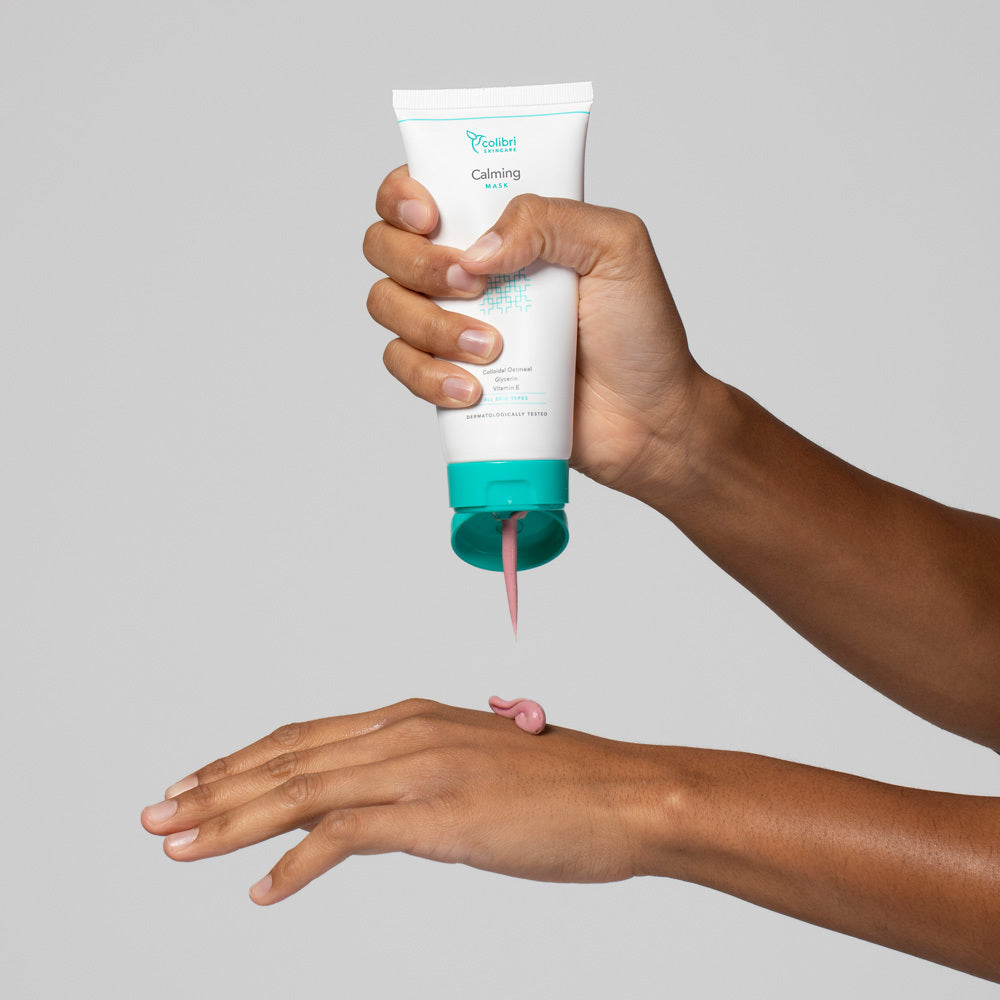
What to do if skincare initially worsens your condition?
What is an initial worsening of symptoms?
If your skin initially worsens when using a new skincare product, this could be a temporary worsening of symptoms. This is a completely natural reaction of the skin, as it needs time to adjust to the new active ingredients. You can think of it similarly to changing your diet or starting a new sport. In these cases, you often experience initial negative reactions (such as muscle soreness after exercise) because your body needs to go through an adaptation process. Similarly, your skin needs time to adjust to the valuable nutrients you're using to care for it.
An initial worsening of symptoms indicates an accelerated skin renewal process. This can certainly lead to an initial appearance of more blemishes, redness, and sometimes itching and tightness of the skin. The duration of an initial worsening can vary considerably; it can be brief or last for several weeks.
How serious is an initial worsening of symptoms?
An initial worsening of symptoms isn't necessarily a cause for concern. In most cases, it doesn't mean you're completely intolerant to the product. While skin reactions like redness, irritation, and breakouts are certainly annoying, there's no need to worry. Generally, the active ingredients that trigger this initial worsening are very well tolerated after the initial adjustment period.
What should I do if my skin reacts to skincare products?
If your skin reacts to a new product, the first thing to do is stay calm and try to assess the cause. Problems are always easiest to solve when you know what's causing them. The following steps can help you with this.
Patch test
First, you should try to rule out an allergy. If you already know you have allergies to certain ingredients, it's best to check the ingredient list very carefully again. Sometimes you can overlook a relevant ingredient, or the product may contain a derivative of an active ingredient that you don't tolerate.
To test for any unknown allergies, a patch test is helpful. Apply a small amount of a single product to the inside of your elbow or neck and observe your skin's reaction for 24-48 hours. If the tested area reddens or reacts negatively in any other way, you should consult a doctor to determine the specific allergy. If the area remains unaffected, you tolerate the product itself, and the issue was likely due to the dosage.
We generally recommend doing a patch test with every new product. This will give you a first impression of the product and help you decide whether a diluted application might be suitable for you initially.
Diluted application
If the patch test was unremarkable, your skin probably just needs to get used to the highly concentrated active ingredient. This is actually a very common reaction, especially with ingredients like retinol or vitamin C.
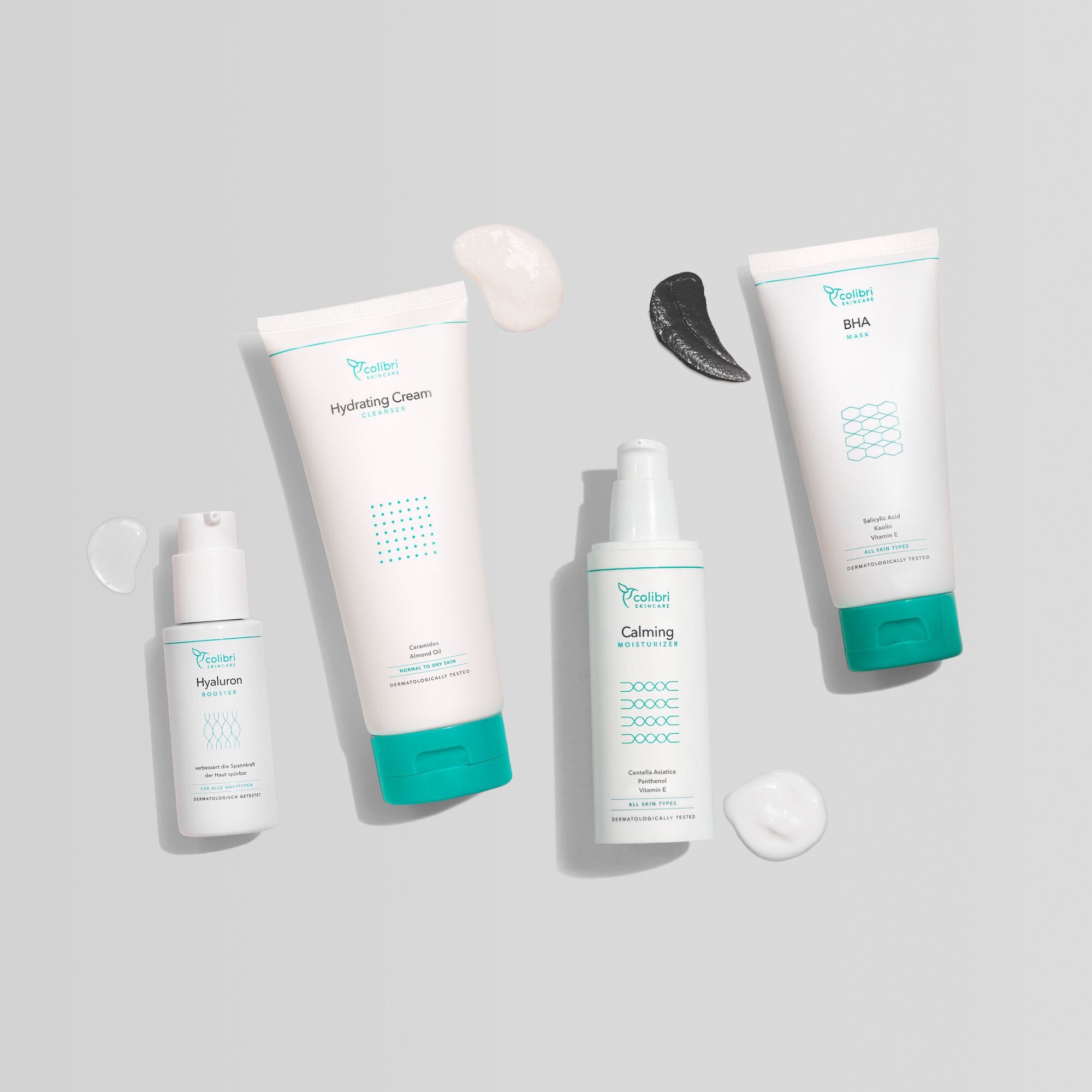
You can help your skin adjust to the new active ingredient by diluting it with another product. We recommend the following products from our range for dilution:
-
Hyaluronic Acid Booster
-
Calming Moisturizer
-
Rich Care Moisturizer & Rich Night Moisturizer
- Organic jojoba oil
All these products are very well tolerated and are therefore ideally suited for gradually introducing others.
The dilution level depends heavily on your skin's sensitivity and the severity of your initial reaction. The stronger the reaction and the more sensitive your skin is, the lower the dosage of the product you're introducing should be. If your skin only reacted mildly, you can start with a 1:1 dilution, for example. If the reaction was severe, it's perfectly fine to start with just a few drops of the new product and dilute it with a larger amount of your chosen product. It's better to start with a small amount than to overwhelm your skin. It can also help to use the new active ingredient not every day, but only every two or three days, depending on what works best for you. You can then gradually adjust the dilution. Unfortunately, there's no one-size-fits-all solution. The best approach is to trust your instincts; after all, you know your skin best.
Pause application
If your skin has reacted strongly, it may be necessary to discontinue use completely for a while. During this recovery period, it's best to care for your skin with gentle and regenerating skincare products. If you already had a successful routine that your skin tolerated well, then stick with those products for now. Once your skin has recovered, you can carefully test the new active ingredient again in a diluted form.
More tips
It's very important not to overwhelm your skin. Of course, you'd ideally like to try all new products at once. That's understandable, but a little more patience will prevent irritating your skin. Therefore, you should only introduce one new product at a time, and only start with the next one once it's well tolerated and integrated into your routine.
The same applies to the frequency of application. Applying a new active ingredient seven days a week right away is unfortunately not advisable. Depending on the active ingredient, every two to three days, or sometimes even just once a week, is a better schedule. In skincare, more is not necessarily better. Often, even small concentrations and a few applications can make a big difference.
An initial worsening of symptoms does not necessarily mean there is an intolerance. Often, all it takes is a little patience and a willingness to experiment, and the ingredient that initially seemed to cause problems suddenly becomes the preferred active ingredient.
Read more
Getting the active ingredients used to your body – here's how it works
We're always eager to try new skincare products. But what...
Czytaj dalej
Slow-aging ingredient retinol: Vitamin A in skincare
Retinol = Slow-Aging? Definitely! We'll tell you why this...
Czytaj dalej